
What is Industrial Roofing? A Complete Guide

Industrial roofing is designed to meet the operational needs of sectors such as manufacturing, warehousing, logistics and distribution. These specifically designed roofing systems are engineered to support building operations and accommodate relevant industrial equipment.
In this guide, we provide the answer to ‘what is industrial roofing?’ and explore the types of roofing available for industrial premises.
What is Considered Industrial Roofing?
Industrial roofing refers to roofing systems that are designed to meet the logistical requirements and demands of industrial businesses. These large roofing systems typically need to withstand a larger roof span to accommodate day-to-day operations and may have heavier loads due to HVAC and solar PV installations.
Industrial roofing systems and structures in general may also need to withstand harsher environmental conditions depending on their location and usage. Some examples of industrial buildings that will have this specific roofing type include logistics centres, manufacturing plants, warehouses, distribution businesses and processing sites.
Types of Roofing for Industrial Buildings
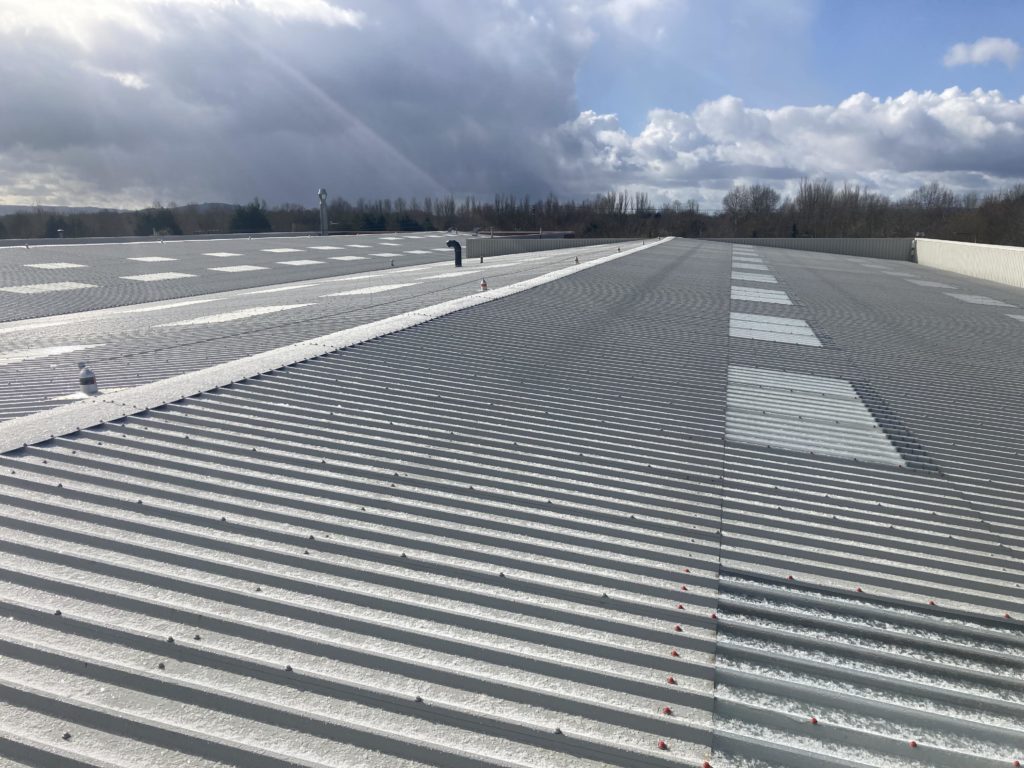
Industrial roofing uses a range of different roofing systems. The most suitable system will depend on the building’s function, lifespan requirements, operational needs and budget. The most common roofing types of industrial structures include:
– Metal roofing: One of the most common solutions for industrial buildings, as it is durable, has a longer lifespan and has low maintenance requirements, making it suited to factories, warehouses and distribution centres.
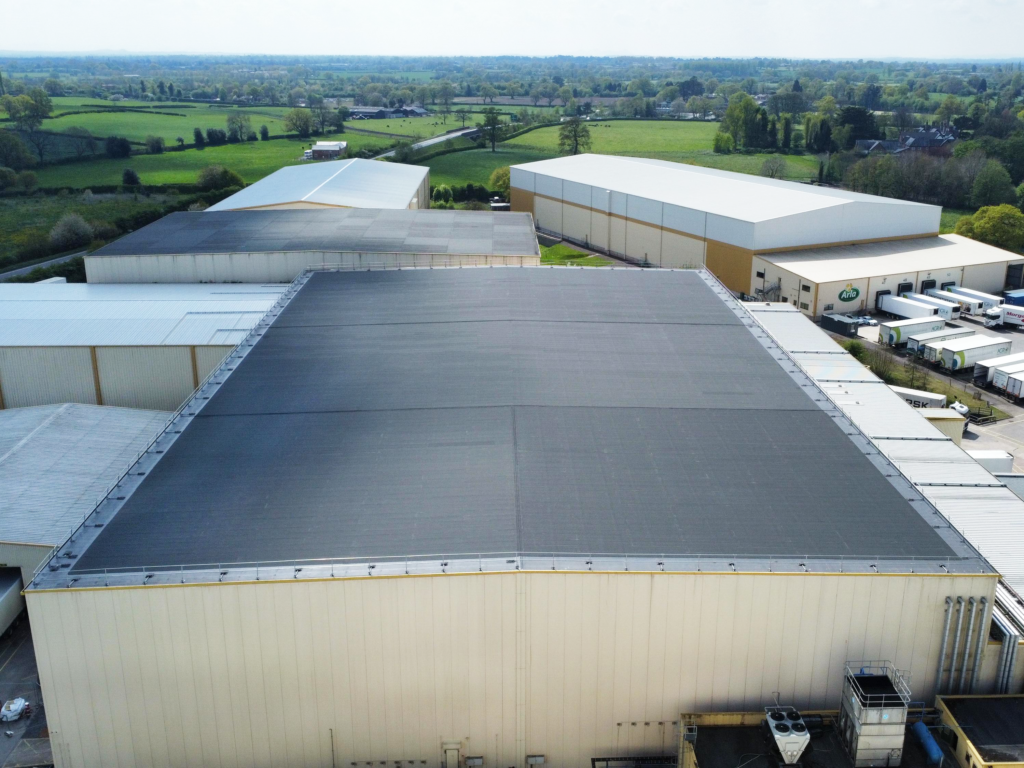
– Flat roofing: A practical choice for many industrial premises, providing easy access to roof-mounted equipment such as solar PV systems and HVAC units. A range of options are available, including:
Single-ply: A lightweight waterproof membrane that is flexible and weather-resistant.
Bituminous membrane: A multi-layer roofing system that is durable and hard-wearing across large industrial roofs. Have a look at our blog on single-ply vs bitumen membrane for more information.
Liquid roofing: A seamless membrane that is installed over an existing sound roof structure, extending its life and providing waterproofing.
Industrial vs Commercial Roofing
Commercial and industrial buildings may use many of the same roofing systems, but each is designed to meet different operational requirements. Some of the key differences between the two include:
Materials & Build Quality
Industrial roofing typically uses robust materials that are designed to endure demanding environments. This includes holding roof-mounted equipment, providing frequent maintenance access and, in some cases, withstanding exposure to high temperatures and chemicals.
Commercial properties typically choose roofing that balances durability with thermal performance, energy efficiency and appearance.
Design & Construction
Industrial roofs often have to span large areas and require straightforward layouts that maximise operational and machinery placement space. These roofs are designed to accommodate the operational requirements of warehouses, manufacturing facilities and distribution centres.
Roof design for commercial properties is more varied to match the design and style of the existing or new building. Building services and occupant comfort are also considerations in the chosen design of roofing. Installation may also need to take place over live environments where buildings remain operational throughout the works, including healthcare, education and commercial facilities.
Cost & Budget
Industrial roofing typically spans a significantly larger area than other roof types and has greater structural requirements to safely withstand additional loads from roof-mounted HVAC systems, solar PV and other equipment. This is reflected in the overall costs of the project, though this can be mitigated over time by choosing roofing material with a long service life and lower maintenance requirements.
The cost for commercial roofing is influenced by the design of the building, which is often more variable, the chosen roofing system and any extras included as part of the roofing design, such as insulation or solar PV equipment.

Durability & Upkeep
Roofing systems on industrial premises require consistent and easy access to equipment. This means the chosen roof must be able to withstand regular footfall and general operational conditions as well as the heavier weight placed on it from roof-mounted HVAC, solar PV and other equipment.
Commercial roofs also need to be durable and maintain thermal efficiency over time. Key priorities include preventing water ingress and maintaining the appearance of the building alongside protecting the roof structure itself.
Installation Process
Installing an industrial roofing system is a large task due to the scale and span of the roof itself. Careful coordination is required around manufacturing processes and logistics, particularly if there is equipment that cannot be easily removed from the building throughout the installation process.
Commercial roof installation often involves working above occupied buildings, requiring careful planning and management throughout. In some cases, such as with healthcare facilities, roof installations are conducted over live environments to minimise disruption.
Customisation Options
The customisation of industrial roofing typically centres around specific operational requirements for the business. For example, solar PV compatibility, rooflights, ventilation, roof access systems and plant support.
Commercial roofing places emphasis on functionality and design. Customisation can include anything from colour finishes to match cladding to insulation installation and other energy-efficiency features.

Why Choose Central Group for Industrial Roofing?
Central Group has more than 40 years of experience delivering industrial roofing projects for manufacturing facilities, warehouses, logistics centres and other industrial premises across the UK. We have extensive experience delivering tailored roofing solutions for our clients, including a 5,000m² waterproofing system for Safran Landing Systems Ltd and a 13,860m² waterproofing system for Americold.
Our expertise spans metal roofing, flat roofing and exterior cladding, with the capability to deliver complex projects safely over live environments while maintaining the highest standards of quality and health & safety.
Contact our team today to discuss your industrial roofing requirements and arrange a survey or quotation.